Ohma
The Deer KingOhma is Tohma’s father, an aging herder whose precarious household receives Van as both a stranger in need and a potential source of knowledge. His story links kinship and mutual aid to the material struggle for survival in the northern settlement; later, when a black animal attacks at night, Ohma is injured and must confront how little the familiar name of the Black Brothers explains what has happened.
Identity and Household
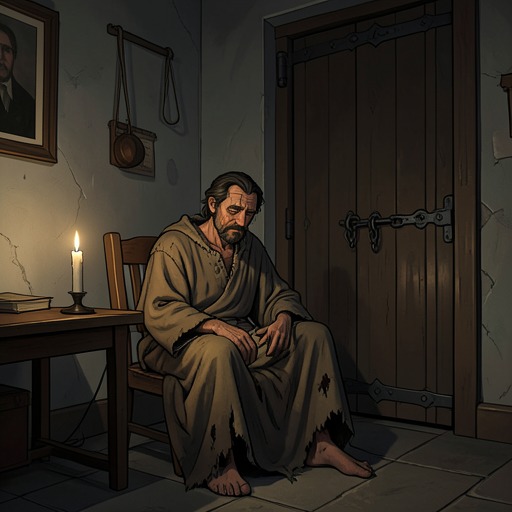
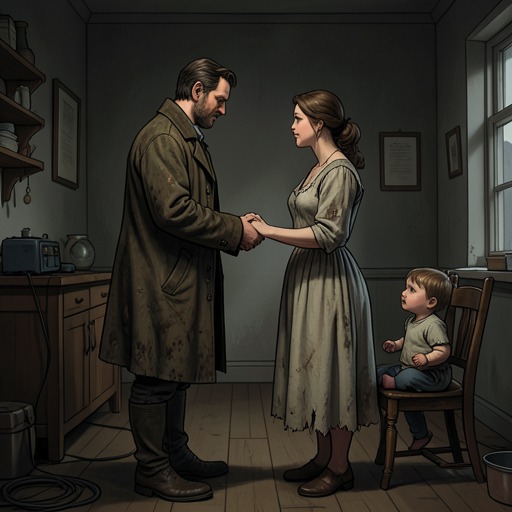
Ohma lives with his wife, Kiya, and their son Tohma in a tiny settlement made up of three tents within a stone windbreak. He is described as older than Van expects, with a tense face and a gnarled hand. The family’s circumstances account for that tension: the settlement’s two households are extremely poor, and Ohma’s household has lost much of the labor and support on which a herding family depends.
The household has been reduced by successive disasters. An avalanche struck the camp four years earlier. The year before Van arrives, a contagious disease killed both Tohma’s elder brother and Yoki’s son; the loss of Tohma’s brother is the sickness he mentions when explaining why he had to take furs and meat to market alone. Ohma’s younger brother Yoki is the only man in his prime, while Tohma is the only youth. Yoki’s married daughter and her children live far to the northwest, and the distance means they rarely meet the rest of the family.
Ohma’s family and Kiya’s kin are connected by a history of mutual assistance. Kiya came from a family of reindeer herders on the northern outskirts of Zol. Her relatives emigrated when she was a girl after people in the region were forced to abandon their homes and resettle. Disease and accidents steadily reduced her kin, and Ohma’s family came to their aid. The two families continued helping each other, and Kiya and Ohma grew close. Their shared practice of assistance did not make them prosperous: both families remained poor, and Kiya’s Zolian origins also made it harder for them to feel at home in a larger clan household.
Livelihood and the Welcome to Van
Ohma’s family depends on reindeer, but their numbers and income are insufficient. Ohma explains that a single family needs at least twenty reindeer for support, while each animal is subject to a head tax. Tax rates are lighter for people with Zolian blood, but that relief applies only to Kiya and Tohma, not to the whole household. Under pressure, Ohma sold some reindeer and tried to raise pyuika, which are taxed less heavily. The effort failed because the family lacked the knowledge to breed them, leaving the household close to disaster.
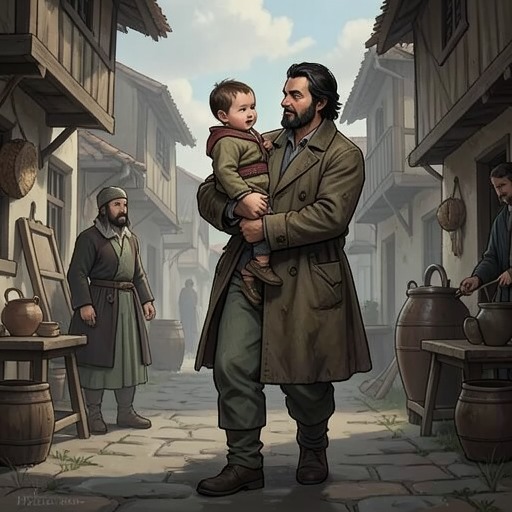
Tohma brings Van home after Van has saved him. Ohma listens intently to his son’s account, then slowly nods and gravely thanks Van, extending his hand. He explains that accepting Van as a mikucha, an adopted clan member, is for the clan chief to decide. For the present, however, Van may stay: as long as he lives and works with the family, they will share their food and tent. The welcome is practical rather than ceremonial, but the strength of Ohma’s grip moves Van.
The family’s poverty gives that gesture additional weight. Van sees the family’s eyes fill with tears as they handle the grain, dried fruit, potatoes, and beans Tohma bought with the money from selling furs. Such provisions answer an immediate need, but Van’s presence offers something more: he is another able-bodied adult and, crucially, someone who knows about pyuika. For a family hoping to survive without asking the clan for help, that knowledge makes his arrival a source of hope.
Work and Family Responsibilities
With winter approaching and little time to prepare, Van puts his skills to work. Tohma’s injury prevents him from doing heavy outdoor labor, so Van has him sharpen hunting knives and prepare traps. Van makes firewood by cutting and hauling logs from the forest, splitting them, and stacking them to dry; Yoki had already started, but the supply was still far from adequate. Once the wood is ready, Van joins Ohma and Yoki in repairing the winter corral for the reindeer and pyuika.
The corral is essential because winter changes the settlement’s relationship to danger. In much of the year the animals are not fenced in, since tethered fawns keep their mothers nearby and the reindeer herd stays together. When game grows scarce, however, hungry wolves—commonly called the Black Brothers—may prey on the reindeer. The herders need a strong, high fence to keep predators out. The hunting dogs bring another risk: although they are useful in pursuing game, they might attack a reindeer calf. Ohma explains the local precaution of hanging a length of wood from each dog’s neck; the wood catches on the corral gate’s frame and can keep a dog from slipping through an accidentally open entrance.
This practical attention to winter preparation shows the household’s survival as collective work. Ohma contributes alongside Yoki and Van, while Tohma works within the limits of his injury. The tasks are not incidental to the family’s welcome of Van: shelter and food are shared on the understanding that people will work together, and the firewood and corral protect the animals on which the household depends.
The Night Attack and Its Aftermath
During the night, Van senses that the pyuika are panicking and that the hunting dogs are yelping. After handing Yuna to Tohma, he puts on his coat and gloves and takes a hatchet. He looks toward Ohma but cannot explain what is happening clearly, managing only to croak a warning that something black is attacking. Ohma asks whether he means the Black Brothers, but Van cannot answer.
Tohma sees the black shapes rushing over the snow and cries out to his father. In the torchlight, the animals’ black fur, golden eyes, and bared fangs become visible. The leader launches at Ohma. He raises his torch, but the animal turns its head in midair, avoids the blow, and bites his arm. Tohma strikes it with his own torch; sparks fly, and the animal releases Ohma before rolling across the ground. Ohma’s thick coat sleeve prevents the fangs from penetrating his skin, but the attack leaves him shaken.
In the morning, one black carcass lies on the snow, its limbs splayed and its body frozen. Van sees no trace of the strange union he felt with the animal the previous night and notes that its death may explain the absence. Ohma is wooden-faced and avoids Van’s eyes. Van understands that Ohma may be struggling both with the terror of the sudden attack and with what he saw Van do while fighting the animal.
Yoki first says that the carcass is not one of the Black Brothers. Ohma, who had initially avoided looking at it, examines the body; his rigid expression gradually eases into a puzzled frown, and he agrees. His recognition changes the meaning of the attack: the black animal’s appearance had suggested a known predator, but the family cannot simply place it among the wolves they call the Black Brothers. The episode leaves Ohma physically unpierced but emotionally unsettled, and it gives the familiar name of a winter danger a newly uncertain edge.